

Reflections from a Global Physician Scholar
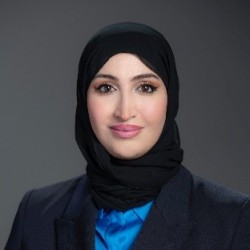
Name: Noora Alhajri, MBBCh, MPH
Location: Cleveland Clinic Abu Dhabi
Current position: PGY-4 Internal Medicine Resident
2024–2025 Global Physician Scholar Program Awardee
What aspects of your training and professional journey sparked your interest in internal medicine and led you to apply for the Global Physician Scholar Program?
My interest in internal medicine developed from the unique balance the field offers between broad clinical problem solving, long-term patient relationships, and the opportunity to influence outcomes beyond the bedside. During my training, I was drawn to the intellectual depth of internal medicine and the diversity of patients and disease processes we encounter daily—from critically ill cardiac patients to complex chronic disease management on the wards and in clinic. I found that internal medicine allows physicians to think comprehensively, integrate evidence into decision making, and care for the patient as a whole rather than focusing on a single organ system.
What strengthened this passion even further was my exposure to research and clinical epidemiology. Through my academic training in epidemiology and biostatistics and my research experience and current work at Cleveland Clinic Abu Dhabi, I began to appreciate how research can directly shape patient outcomes and health care delivery. I realized that meaningful improvements in medicine occur not only through individual patient encounters, but also through generating evidence, improving systems of care, and translating research findings into everyday clinical practice.
Internal medicine became the ideal field for me because it sits at the intersection of clinical care, critical thinking, education, and population health. I enjoy managing a wide variety of complex cases, especially in high-acuity settings, while also thinking about how we can improve care pathways, reduce complications, and optimize outcomes at a broader level. Whether through outcomes research, quality improvement initiatives, or integrating emerging technologies, such as AI, into cardiovascular and inpatient medicine, I am motivated by the idea that physicians can impact both individual lives and entire patient populations.
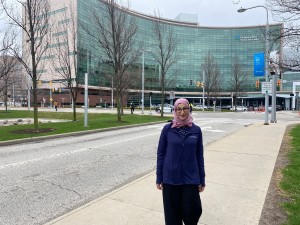
These experiences naturally led me to apply for the Global Physician Scholar Program. The program represents the type of environment I have always sought: one that values clinical excellence, academic curiosity, mentorship, innovation, and global collaboration. As an international physician, I also value the opportunity to learn from diverse health care systems and contribute perspectives shaped by training across different environments. I believe the program would help me continue developing as both a clinician and physician–scientist while strengthening my ability to bridge research and patient care in a way that meaningfully improves outcomes.
Please describe your experience in the Global Physician Scholar Program.
My Global Physician Scholar Program experience was hosted by Cleveland Clinic under the mentorship of Dr. Amanda Vest. The observership provided me with a unique opportunity to immerse myself in a highly advanced academic and clinical cardiovascular environment while gaining exposure to innovative models of heart failure care, particularly in the field of remote hemodynamic monitoring and advanced heart failure management.
The primary focus of my experience was learning about the implementation and operational structure of remote heart failure monitoring programs, with a special emphasis on the CardioMEMS device. One of my main goals was to understand how remote pulmonary artery pressure monitoring can improve heart failure outcomes by allowing earlier detection of congestion, proactive medication adjustments, and prevention of recurrent hospitalizations. Beyond learning the technical aspects of the CardioMEMS device, I focused on understanding the infrastructure required to establish a successful remote heart failure clinic, including multidisciplinary coordination, nursing workflows, patient selection, data monitoring systems, and longitudinal outpatient follow-up. The experience was particularly enriching because it demonstrated how technology, clinical medicine, and systems-based care can work together to improve patient outcomes through proactive and preventive heart failure management.
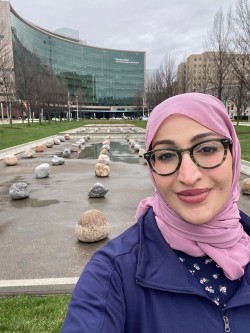
My observership was academically rigorous and clinically immersive. I participated in daily morning reports; inpatient heart failure rounds; CCU rotations; outpatient clinics; and multidisciplinary meetings with physicians, fellows, nurses, and device specialists. I gained exposure to complex cases involving cardiogenic shock, advanced cardiomyopathies, LVADs, transplant patients, and decompensated heart failure, with discussions frequently centered around guideline-directed therapy and landmark clinical trials.
One of the most impactful experiences was observing right and left heart catheterizations and directly witnessing the implantation and operation of the CardioMEMS device. This provided valuable insight into how invasive hemodynamic monitoring can be integrated into long-term outpatient care to reduce hospitalizations and improve quality of life. Throughout the program, I was inspired by the institution’s strong culture of collaboration, innovation, professionalism, and patient-centered care, which further strengthened my interest in advanced heart failure and health care innovation.
Outcomes and Reflections
Looking back, how did the experience meet or reshape your original goals as a Global Physician Scholar?
Looking back, the Global Physician Scholar Program exceeded and significantly reshaped my original goals. Initially, I entered the experience hoping to gain a deeper understanding of advanced heart failure care, remote hemodynamic monitoring, and the infrastructure required to establish a remote heart failure clinic. Although I certainly achieved those objectives, the experience ultimately became much more transformative on both a professional and personal level.
What I initially viewed as a clinical observership evolved into an experience that fundamentally changed the way I think about innovation, leadership, mentorship, and patient-centered cardiovascular care. It broadened my understanding of how advanced health care systems successfully integrate research, technology, multidisciplinary collaboration, and compassionate clinical practice into a unified model of care. More importantly, it reinforced for me that the future of medicine—particularly heart failure and cardiovascular medicine—will increasingly depend on proactive, data-driven, and technology-enabled care models that improve outcomes before patients deteriorate clinically.
Can you share a memorable experience during your Global Physician Scholar experience that had a significant impact on you?
One of the most memorable experiences during my observership was attending a high-level scientific meeting focused on the latest advances in remote heart failure technologies and implantable hemodynamic monitoring devices. During the meeting, experts discussed emerging technologies beyond CardioMEMS, including novel devices currently undergoing phase 2 and phase 3 clinical trials aimed at improving remote monitoring, early decompensation detection, and outpatient management of patients with advanced heart failure.
For me, that meeting was profoundly inspiring. It was the first time I truly witnessed the depth of scientific discussion involved in shaping the future of cardiovascular medicine at an international level. The conversation was not only about devices themselves, but also about patient outcomes, implementation science, health care delivery models, cost-effectiveness, and how innovation can be translated safely into clinical practice. Sitting in that room made me realize the kind of physician I aspire to become—someone who not only practices medicine but also contributes to advancing it.
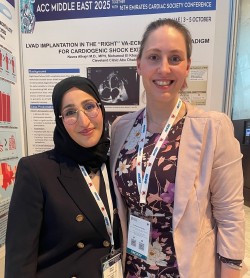
A particularly defining part of this experience was observing Dr. Amanda Vest as both a physician–scientist and mentor. What stood out to me most was not only her extraordinary expertise in advanced heart failure and emerging technologies but also the way she combined academic excellence with genuine compassion and humility. I watched her interact with patients with remarkable patience, empathy, and attentiveness, ensuring they understood their disease processes, treatment options, and the purpose behind complex therapies. Even in a highly specialized and technologically advanced field, she consistently centered care around the patient as a person.
Equally impactful was witnessing how she balanced multiple demanding roles—as a clinician, researcher, educator, mentor, and mother—while still remaining approachable, supportive, and deeply invested in her trainees. She consistently created time for teaching, welcomed questions with kindness, and supported learners from different backgrounds and countries with sincerity and generosity. Her mentorship demonstrated to me that excellence in medicine is not defined solely by scientific achievement but also by character, compassion, and the willingness to uplift others.
That experience profoundly influenced my future aspirations. It reinforced my desire to pursue a career in cardiovascular medicine with a strong focus on advanced heart failure, research, innovation, and patient-centered care. It also inspired me to strive toward becoming a physician who can combine clinical excellence with mentorship, education, and meaningful contributions to improving health care systems.
How have you applied the knowledge, skills, or perspectives gained through the Global Physician Scholar Program in your home institution or local health care system?
Following the completion of the program, I worked to apply the knowledge and perspectives I gained within my home institution and local health care system in the United Arab Emirates. One of the most important initiatives I pursued was developing a proposal and protocol aimed at introducing remote pulmonary artery pressure monitoring technology into our health care system. I engaged in discussions with regulatory authorities and health care leadership regarding the feasibility, infrastructure, and potential clinical benefits of implementing this technology locally, particularly for patients with advanced heart failure who experience recurrent hospitalizations.
The experience also strengthened my appreciation for the importance of multidisciplinary collaboration, longitudinal outpatient monitoring, and integrating innovation into routine patient care. I became more motivated to contribute to outcomes research, health care quality improvement, and the development of modern heart failure care pathways that align with international standards while addressing local health care needs.
In what ways has participating in the Global Physician Scholar Program impacted your personal and professional life?
On a personal level, the Global Physician Scholar Program had a lasting impact on my confidence, perspective, and professional identity. It exposed me to an environment of academic rigor, innovation, and mentorship that pushed me to think bigger about my future goals and potential contributions to medicine. It reinforced my belief that meaningful change in health care can occur through a combination of clinical excellence, research, compassion, and collaboration across borders.
Professionally, the experience solidified my commitment to internal medicine and cardiovascular medicine while further strengthening my passion for advanced heart failure and health care innovation. Personally, it reminded me of the type of physician and mentor I hope to become—someone who not only advances science and patient care but who also supports, teaches, and inspires others with empathy and humility.
Overall, the Global Physician Scholar Program was a transformative experience that significantly strengthened my interest in advanced heart failure, cardiovascular medicine, and health care innovation. It not only enhanced my clinical understanding of complex cardiovascular care but also broadened my perspective on how research, technology, and multidisciplinary systems can be integrated to improve both individual patient outcomes and population-level health care delivery.
Back to the May 2026 issue of ACP Global