

The Power of Narrative Medicine: Unveiling the Unspoken Stories
Growing up, I've had a love–hate relationship with my doctor visits. I've always been in awe of how—no matter what ailment I went to the doctor for—they'd always find a way to make me feel better in the end. However, there was always something that never sat right with me. I remember putting on a thin paper gown and sitting on a cold bed waiting for what seemed like an eternity for the doctor to enter. But that wasn't what bothered me: that time actually gave me the space to carefully mull over exactly what I wanted to express when the doctor walked in. However, more often than not, with a brisk knock on the door, the doctor would enter, only to exit just as swiftly. Although we must have discussed my symptoms and devised a treatment plan, the experience was always a blur. As I was left alone with just the icy cold imprints of the doctor's stethoscope on my skin as proof of their visit, I couldn't help but think that something important was being left unsaid.
Nonetheless, I continued my journey to become a physician, but these experiences from my doctor visits always lingered in the back of my head. I just had to know why these visits felt so incomplete and what I could do as a future physician to ensure my patients felt like their visits were complete. Finally, going through my first year of medical school allowed me to get an answer to this lifelong question albeit slowly.
I remember my first patient encounter like it was yesterday. I approached the room with an air of confidence, having carefully rehearsed the patient encounter script for countless hours. I reassured myself that it would be a mere stroll in the park. We had 8 minutes to get the encounter done but I prided myself that I could get it done in 6. With a loud knock at the door, I walked in ready to provide an answer to my patient's problem. And in the blink of an eye, it was over. The encounter unfolded precisely as I had practiced, efficiently concluding with a treatment plan that I thought addressed my patient's concerns. Now all that was left was a debriefing with the physician and the small group of students who were also in the room watching my performance.
In the aftermath of that seemingly successful encounter, I received unexpected feedback during my debriefing—a jarring wake-up call that shattered my complacency. It was in the poignant words of the patient that I recognized the stark truth: I had unwittingly “assumed the role of a robot” devoid of the “empathetic touch” that defines true health care. Lost in the fervor of taking meticulous notes, I failed to perceive the silent distress etched upon the patient's face, a reflection of the burdens he carried beyond his medical condition. Oblivious to his nonverbal cues, I missed the opportunity to offer emotional support and genuine understanding. Moreover, the patient also expressed discontent with my proposed treatment plan, which served as an unwavering reminder that my hasty assumptions had led me astray. In that moment I realized I had inadvertently become the shortcomings I had once despised about my own experiences as a patient. I had become an integral part of the problem, perpetuating a system devoid of human connection and genuine and holistic care.
Though I was taken aback by my first patient encounter, it was just what I needed to reshape my perspective and redefine my approach to patient care. Throughout the ensuing year, as I engaged in more patient encounters, I consciously redirected my focus, channeling my energy toward being present in the moment rather than being consumed by notes and scripts. I learned to listen with my heart, attuned to the unspoken words and subtle cues that reveal the intricate tapestry of a patient's experience. No longer content with a superficial understanding of their primary concern, I yearned to unlock the depth of their narratives, to create a space where their voices could be heard and their stories could unfold. Patient encounters were no longer rehearsed performances, but rather sacred exchanges where I held the responsibility to provide solace and genuine empathy. It was through this transformation that I discovered the essence of narrative medicine where physicians can become participants in the stories told by their patients, allowing for a more complete and meaningful understanding of their health concerns.
In my endeavor to implement a narrative approach to medicine, I embraced a set of guiding principles. I learned the power of asking open-ended questions such as “Tell me more about that” and “What do you think is going on to cause this?” These inquiries allowed me to dive deeper into the patient's perspective, unraveling the intricacies of their unique narrative. I also recognized the significance of uninterrupted dialogue and consciously resisted the urge to interject or prematurely offer solutions. I realized that there was no prize for finishing my patient encounters early; instead, I gave patients the space to express themselves fully, allowing their thoughts to unfold organically. In addition, I actively made sure to avoid making assumptions or passing judgment. Rather than viewing noncompliance as the patient's failure, I reframed it as a blocked narrative—an opportunity to explore the barriers that hindered their adherence to treatment. Finally, I made sure to allow for moments of silence as my patients concentered. I resisted the impulse to fill the void with more questions and instead embraced the power of silence, waiting patiently for the patient to break the stillness. It is in those pauses that the patient often found the courage to share their deepest worries.
In the complexity of medicine, the principles of narrative medicine may seem deceptively simple, almost effortless to incorporate into our practice. Yet, as physicians undergo years of rigorous training and navigate the demands of a fast-paced profession, it can be all too easy to lose sight of these foundational aspects. I, by no means an expert, am humbled by the lessons I learned during my first year. It provided me with invaluable opportunities to cultivate the skills necessary for engaging in medicine with a narrative lens. These encounters allowed me to address the lingering questions that had haunted me, bringing completeness to each patient visit and fostering a more profound connection. As I embark on the journey to becoming a full-fledged attending physician, I hold onto the hope that I will forever carry these elements within me, preserving the narrative approach to medicine. For it is through these small yet profound gestures that we can truly honor the essence of our patients' stories and provide them with the holistic care they deserve.
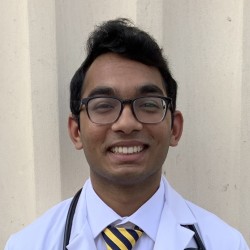
Sathvik Srikalyani
The University of North Texas Health Science Center
Graduating Class of 2026
Back to the April 2026 issue of ACP IMpact