

Dr. Stout talks about how his initial interest in general surgery changed to rheumatology because of its diagnostic complexity and emphasis on longitudinal care
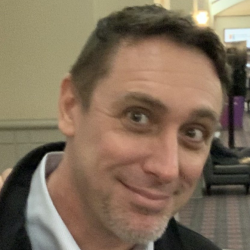
Brian Stout, MD, MBA, MHA
Clinical Chief of Rheumatology
Associate Program Director, Rheumatology Fellowship Program
Beth Israel Deaconess Medical Center
Boston, MA
Instructor in Medicine
Harvard Medical School
Boston, MA
— MEDICAL SCHOOL —
University of Missouri-Columbia School of Medicine
Columbia, MO
— INTERNAL MEDICINE RESIDENCY —
Tripler Army Medical Center
Honolulu, HI
— RHEUMATOLOGY FELLOWSHIP —
Walter Reed National Military Center
Bethesda, MA
What is your current position?
I am Clinical Chief of Rheumatology at Beth Israel Deaconess Medical Center (BIDMC) in Boston, MA, and an Instructor in Medicine at Harvard Medical School, which is also in Boston. In addition, I contribute as the Associate Program Director of the BIDMC Rheumatology Fellowship Program. My work includes outpatient rheumatology; inpatient consultative care; education of fellows, residents, and medical students; and divisional leadership initiatives focused on quality of care, clinical operations, and educational program growth.
Where did you attend medical school and post grad training?
I attended medical school at the University of Missouri-Columbia School of Medicine in Columbia, MO. Go MIZZOU! I completed my internal medicine residency at Tripler Army Medical Center in Honolulu, HI, and my rheumatology fellowship at Walter Reed National Military Medical Center in Bethesda, MD.
Why did you choose to become a physician?
I chose to become a physician because I believed it was the best possible expression of who I could be and what I could contribute to my society and country. At my core, I love humanity and I love people, and I consider it a privilege to help others navigate some of the suffering they experience in life.
What field of internal medicine did you select and why?
I was actually initially drawn to general surgery, but I ultimately realized I most valued the long-term relationships that internal medicine allows in both hospital and outpatient settings. Rheumatology offered that continuity of care along with diagnostic complexity, thoughtful problem solving, and the opportunity to care for patients over time. And I still get to do an arthrocentesis from time to time!
Please describe a typical day in your practice.
A typical day includes making outpatient visits, reviewing labs and imaging, and coordinating and/or adjusting treatment plans. I also spend time teaching fellows, residents, and students; handling inbox and documentation work (most despised); and addressing administrative and operational issues as Clinical Chief. I may also get to eat lunch from time to time.
What are some of your special interests professionally?
My special clinical interests in rheumatology include rheumatoid arthritis, psoriatic arthritis, SAPHO spectrum disorders, and enteropathic arthritis. I am especially interested in the diagnostic and therapeutic challenges of these conditions and in improving the longitudinal care of patients living with complex inflammatory disease. I am also focused on cultivating a clinical environment and educational curriculum that strengthens training, improves efficiency, and supports thoughtful, emotionally intelligent, patient-centered care.
What are your interests and hobbies outside of medicine?
Outside of medicine, I enjoy running, listening to the blues, reading, and occasionally playing video games. Most of all, though, I value time with my wife and three kids, and I am always happy to catch a Red Sox game at Fenway.
What advice would you like to share with medical students or what do you wish someone would have told you while you were in medical school?
Take care of yourself and your personal relationships. Look out for your colleagues, both in training and beyond. If your compassion does not include yourself, it will eventually become harder to sustain it for others. Medicine is a long journey and caring well for people starts with learning how to care for yourself, too.
Which living person do you most admire?
Bryan Stevenson. He is a lawyer and advocate who has devoted his life to defending the vulnerable, confronting injustice, and speaking with both compassion and moral courage.
Which talent would you most like to have?
Oh how I wish I had learned to play the guitar when I was younger. It is a skill I have always admired, and I think it would be a great creative outlet and a lifelong source of enjoyment. I suppose it is never too late to start. Better get on that!
Who is your hero of fiction?
My hero of “fiction” is Arjuna from the Mahabharata. The Bhagavad Gita impressed upon me the importance of engaging fully in life, even amid doubt, conflict, and uncertainty. His story represents duty, moral struggle, and the courage to act with purpose when “life” asks something difficult of you.
What is your motto?
“Success is not final, failure is not fatal: it is the courage to continue that counts.”
Back to the April 2026 issue of ACP IMpact
More I.M. Internal Medicine Profiles