

I.M. a Health Leader: Karen J. Nichols, DO, MA, MACOI, MACP, CS-F
Where did you attend medical school and post grad training?
I attended Kansas City University – College of Osteopathic Medicine and did my internship and internal medicine residency at what is now Oklahoma State University Medical Center in Tulsa. Both provided excellent education and training, for which I am very grateful.
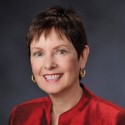
Karen J. Nichols, DO, MA, MACOI, MACP, CS-F
Physician
Chair - ACGME Board of Directors- 2020-2022
What inspired you to choose internal medicine?
I was intrigued by the specialty as we took courses in its related sub-specialties. I also thought OB/GYN might be interesting. I scheduled my rotations for OB first, then IM. After the IM rotation, there was no turning back. I loved everything about addressing the issues of the whole person!
Describe your internal medicine journey and how it has shaped your career.
My internal medicine practice journey started with joining the private practice of two residency mates, back in the Phoenix metro area where my family moved when I was in grade school. In a couple of years, I was elected Chair of IM at our local community hospital, then Chief of Staff. I enjoyed the leadership roles. Since I had also joined the Arizona Osteopathic Medical Association (AOMA when I started practice), I soon started volunteering for the committees everyone hates, the membership committee and the fund-raising committee. It’s not hard to do a good job chairing those committees as no one likes to do that work. That participation led to a position on the AOMA board.
Soon after, one of faculty at my residency called me and said, “I’m nominating you for the American College of Osteopathic Internists (ACOI) board of directors.” The first woman on that board had been elected the prior year, and he wanted to be sure a woman from HIS program was also elected to the board. And so, I was.
All of this organization work as well as serving as a delegate and on its committees for years, led to the nomination and election to the board of the American Osteopathic Association (AOA).
I’m describing these three specific experiences, because it has been my honor and privilege to be the first woman to be elected to be President of AOA, AOMA and ACOI. I was also the first internist to be elected president of the first two organizations. The further unusual aspect of those first two elections reflect the relative scarcity of internists in the osteopathic profession, as compared to family medicine physicians, at that time.
Leadership in medical education has also been a satisfying experience. I have always been involved in osteopathic medical education, starting with taking students, interns and residents on my service of private practice internal medicine from day one.
When Midwestern University/Arizona College of Osteopathic Medicine was founded, I was the first chair of internal medicine, developing student rotations in what was then the 6th largest city in the US (Phoenix) which was a challenge as there had never been a medical school in that city and physicians didn’t even know what I was asking for. And I developed the OMS III IM didactic curriculum teaching it every week.
Then the job of Assistant Dean for Post-Doctoral Education was added to my portfolio. Over time, I worked with several hospitals which resulted in creating two new sponsoring institutions with over 100 residency positions in very rural Arizona.
After working in those two positions for five years, while still practicing internal medicine, I accepted the position of Dean of Midwestern University/Chicago College of Osteopathic Medicine where I served for 16 years. I really didn’t know how to be a dean, but thank goodness, I had experienced faculty and staff who did. And I soon hired an executive coach and a “dean-coach,”bot of whom gave me wonderful guidance. To be sure no one else had to learn this job the way I did, I obtained a $1.5M grant from the Osteopathic Heritage Foundation and started the Costin Institute for Osteopathic Medical Educators, a one-year hybrid fellowship program to train the current and future generations of medical educators.
I love serving medical organizations and entities; national, state, specialty, as well as foundations. All these organizations provide the opportunity to contribute and make a difference. To be one of the first DOs elected to the ACGME board and then the first DO elected chair AND only the second woman to complete a term as chair in 41 years, I still shake my head over how that came about. Who could have predicted such a thing?
How has internal medicine training given you the skills, insight, and/or experience needed to become a leader?
he lessons I have learned as an internist have served me well in so many leadership positions. Here are some specific examples where my internal medicine training gave me the skills, insight and experience to become a leader.
First, every internist knows the importance of asking questions. We don’t understand a patient’s situation without asking questions, which prompts more questions, and so on.
Secondly, as internists, we always carefully clarify definitions. I often teach this point by asking physicians, “what is your least favorite chief complaint?” The answers often include the words “tired” or “dizzy.” When I ask why those are difficult, the perspective is always the same: “I don’t know what that means!”
Putting those two steps together, implemented in full detail, will generally lead the internist in the correct direction.
So how does this apply to leadership? Because we often don’t do either of these things in leadership! We assume we know what the issue is. And where it came from and what it implies. We assume we understand the perspective. I posit that it is equally dangerous to ignore these two steps when seeing a patient, AND when functioning in a leadership role.
Let me give you an example. When I was President of the AOA, an article was published in NEJM about the “Future of Nursing.” While it was clearly about nursing, the perspective was strongly presented that nurses would be taking a major leadership role in providing healthcare in the US. Needless to say, the physician organizations took exception to that aspect of the article. Presidents of six physician and six nursing organizations were invited by the Robert Wood Johnson Foundation to discuss how to better align and proceed. The series of meetings were facilitated by an excellent team. At one point in the discussion, one of the nurses said “we’re independent you know.” You can imagine the immediate reaction from the physicians. We literally argued back and forth about that word for several minutes. Finally one of the facilitators stopped the discussion and asked the nurse “what do you mean by the word ‘independent’?” The nurse explained that she had an independent license and, for example, was expected to verify that an order was for the correct patient, and was the correct med/dosage/interval/interaction with other drugs, or put her independent license at risk. You could have heard a pin drop. All we doctors had a very different definition of the word independent in mind.
Another skill practiced in an internal medicine setting is making effective decisions, which in internal medicine begins with creating a differential diagnosis. Misguided is the doctor who announces the diagnosis based on the first thing that popped into their mind. To say nothing of the poor patient. In the case of medical care, the internist develops the differential diagnosis, including most likely and most serious diagnoses. In a variation of this analytic process, the leader must consider all possible options for a situation, analyze the positives/negatives of these options, from temporary and minor to permanent and of major significance. Another important internal medicine skill that applies to leadership situations.
One more skill that internists have had to learn in more recent times, is persuasion. In years past, this skill was not required of the internist. The patient followed the guidance of the physician without question. However, with the advent of the internet, let alone social media, patients have many sources for information, well-founded as well as misguided. So the effective internist has had to learn principles of persuasion to help the patient understand the validity of their recommendation and plan. The corollary? Nowhere is persuasion more important than in leadership, guiding the followers to the best path.
So my internal medicine training and experience showed me how to function effectively as a leader.
What advice would you share with medical students or trainees that are interested in a leadership role?
My overriding advice to my fellow and future internal medicine colleagues who are currently students and trainees, is to go with your passion and follow your heart.
Here are some points of advice based on my experiences.
POINTERS:
- Speak with authority, not arrogance.
- You are very smart; seek to be wise.
- You are good at what you do or you wouldn’t be where you are.
- It is very important to get comfortable being uncomfortable.
- Don’t worry about what other people think about you because you can’t change that anyway.
- So what if something doesn’t work out; those situations are usually the best learning experiences.
- Failure is just temporary; success is a process.
CAREER ADVANCEMENT ADVICE:
- Get a role model and a mentor. You may also benefit from hiring a coach at some point.
- You may be in a situation where a person who holds a higher status in your organization/entity may agree to be your sponsor, a very helpful assist. Because you never know when you might need a sponsor, always do your best. First, because that is the right thing to do. Second, you never know who might be watching.
RECOMMENDED WEEKLY PROCESS (for all physicians and leaders):
Reflection is very important when reviewing the day/week. What worked and why? What didn’t work and why? And most importantly, what were you thinking, that led to a good plan? And what weren’t you thinking, that could have led to a better plan? Self-assessment is the key to improvement. Besides, who knows you better than you?
PERSPECTIVE:
Remember, you are in a F.O.G. This is an acronym that I created and has been published. “You have to have Faith that the Future will bring Options and Opportunities to meet your Goals.” You just can’t see those options and opportunities right now, because you are in (wait for it) the F.O.G.!
Finally, be BOLD! You will regret the things you don’t do more than the things you do. That was what prompted me to go bungy jumping in New Zealand!
What are your interests and hobbies outside of medicine and how do you balance your work and personal life? Anything you have learned along the way to pass on?
My interests and hobbies outside of medicine mainly circle around family; we travel together, celebrate together, support each other in difficult situations, are always there for each other; such a blessing! And I’ll include some precious friends on that list as well. I’m also an avid reader, or so my book club colleagues think! I must circle back and admit that teaching and writing about physician leadership is also joyful, even if not outside of medicine, strictly speaking. Ok, that’s based on my book “Physician Leadership: The 11 Skills Every Doctor Needs to be an Effective Leader.” I love sharing lessons I have learned the hard way, for others to consider. It is an honor and a privilege. Just as is being an osteopathic internist!!
All this is to say, every aspect of my career has been steeped in osteopathic medicine. And that is the way medicine should be practiced. Patients seek you out for your approach to patient care. Every patient wants what osteopathic medicine brings to the table, even if they don’t know the name of it. We must always honor the commitment as imagined by ATS 150 years ago!
It would take much longer than anyone might like, for me to catalog the impact of osteopathic medicine on my overall life. The opportunities this profession has afforded me are innumerable.
Caring for patients was such a joy; difficult many times and yet satisfying to know I had done my best, honoring each one as a person and making a small contribution to their well-being. I loved my patients.
Being the dean was such a joy; difficult many times and yet satisfying to see MY graduates out in the world caring for patients and now caring for me and my family. I loved my students.
The opportunity to serve the osteopathic profession in leadership roles has been extraordinary. I compare medical organization leadership to the structure of the US Senate. Regardless of the size of the state’s population, every state gets two votes and can provide their input. The same holds true for medical organizations. When you are in meetings with presidents of other medical organizations, no one says, “you only get to speak for the time equal to the relative size of your membership as compared to the other organizations in the room.” If you know the subject, if you can articulate it well, especially if you can bring a different perspective to the discussion, you will be listened to and you can shape the outcome of the meeting. I can think of several occasions where an individual assumed they were the most influential person in the meeting and thus did not need to be well prepared. This opened the opportunity for me to provide a more well-reasoned position in a more professional and polished manner, which carried the day! It would be inappropriate to provide specific examples, just let me say, you should employ the principles listed back in question One. I speak from long experience, that approach will work for you as it has for me.
I think you see a theme here, love. Some may shy away from that word; I find that it encompasses everything we do as osteopathic physicians and as medical educators. Which leads me to my final thought. It is with the utmost of gratitude and humility that I reflect on what a wonderful career this profession has afforded me and my family. I love being a DO!
Congratulations on the 150th anniversary of this wonderful profession!