

I.M. a Health Leader: Mohammed Shipa, PhD, MRCP (UK), MRCP (Rheumatology), MBBS
Where did you attend medical school and post grad training?
I completed my medical education at Dhaka Medical College in Bangladesh, a leading institution in the country. Following this, I pursued basic medical training in both Bangladesh and Singapore, which provided me with a solid foundation in diverse healthcare settings. My passion for advanced medical knowledge led me to London, where I trained at renowned institutions such as Guy's and St Thomas' Hospital and University College London. I achieved my MRCP in Medicine in 2012, followed by MRCP in Rheumatology in 2018. In 2023, I earned a PhD in Medicine, further cementing my commitment to advancing medical science and patient care.
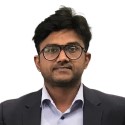
Muhammad R. A. Shipa, PhD, MRCP (UK), MRCP (Rheumatology), MBBS
Principal Investigator and Experimental Rheumatologist, University College London
Honorary Consultant Rheumatologist, University College London Hospital
Locum Consultant Rheumatologist, Addenbrooke’s Hospital, Cambridge University Hospital
Honorary Clinician Scientist, Wellcome Sanger Institute
What inspired you to choose internal medicine?
Internal medicine captivates me because it represents the vast and intricate puzzle of human health. It is a discipline that challenges the intellect with its breadth, offering an ever-evolving landscape of diverse medical problems to solve. At its core, internal medicine allows physicians to serve as detectives, solving complex issues while guiding patients through their most vulnerable moments. The opportunity to make a profound impact on patients' lives by addressing multifaceted conditions is what drew me toward this field.
Describe your internal medicine journey and how it has shaped your career.
My journey in internal medicine began in 2007 at Dhaka Medical College, a bustling tertiary care center that served as a lifeline for the entire country. Although resources were limited, it was here that I honed my clinical acumen, learning to rely on observation and critical thinking. Later, I worked at Square Hospital, one of the most advanced medical facilities in Bangladesh, where I was introduced to cutting-edge technologies.
Through these experiences, I developed a fascination with complex, multisystem diseases and the challenge of addressing diverse patient issues. This led me to specialize in rheumatology, a subspecialty often regarded as the pinnacle of internal medicine due to its intricate nature. During my dual advanced training in London, I was inspired to pursue research, which culminated in my PhD. Today, I hold an academic position at University College London, where I mentor PhD students, junior trainees, and medical students. My research focuses on lupus, a condition that exemplifies the multisystem complexity that first attracted me to this field.
How has internal medicine training given you the skills, insight, and/or experience needed to become a leader?
The rigorous training in internal medicine has equipped me with a unique blend of clinical, diagnostic, and problem-solving skills that are essential for leadership. Working in diverse healthcare settings, from resource-constrained hospitals to advanced medical centers, has deepened my understanding of health disparities and the importance of patient-centered care. The ability to manage complex, multisystem diseases has sharpened my decision-making, and my commitment to lifelong learning ensures that I stay at the forefront of medical advancements. These qualities have shaped me into a leader who can inspire and guide others while pushing the boundaries of medical science through research and teaching.
What advice would you share with medical students or trainees that are interested in a leadership role?
To those aspiring to leadership roles, I would emphasize the importance of resilience, empathy, and continuous learning. Leadership in medicine is not about titles or positions; it is about having the vision to inspire change and the courage to make tough decisions for the greater good. Always remain curious, never stop asking questions, and seek mentors who can guide you through your journey. Remember, a good leader is someone who empowers others, listens, and adapts to the evolving landscape of medicine.
What are your interests and hobbies outside of medicine and how do you balance your work and personal life? Anything you have learned along the way to pass on?
Outside of medicine, I find joy in sports, particularly cricket, and I enjoy cooking for my family. These activities allow me to disconnect from the fast-paced world of healthcare and reconnect with myself and my loved ones. Achieving work-life balance requires intentional planning and mindfulness. I ensure that I dedicate time to both my personal passions and family life, understanding that a healthy personal life contributes to a more focused and compassionate professional one. The key is to remain present in both, to recharge regularly, and to approach each day with enthusiasm and purpose.